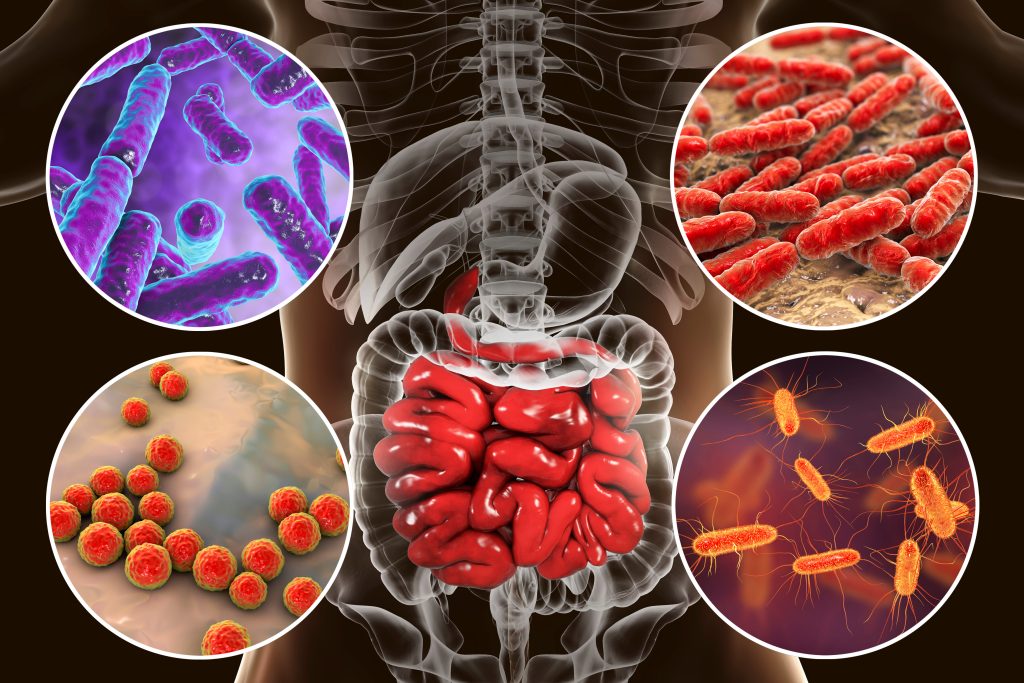
Factors like diet, lifestyle and medications can impact the composition of the gut microbiome, and in turn, the gut microbes can produce metabolites that modulate cell function. This relationship underscores the microbiome’s increased recognition as a key contributor to human health and disease development or prevention.
CAR-T cell therapy
CAR-T cell therapy (Chimeric Antigen Receptor T cell therapy) offers new hope for patients battling certain types of cancer, especially haematologic malignancies like non-Hodgkin’s lymphoma. This groundbreaking form of immunotherapy involves the genetic engineering of a patient’s T cells, a crucial component of the immune system, to equip them with chimeric antigen receptors (CARs) on the cell surface. These receptors are meticulously designed to identify and target specific proteins found on the surface of cancer cells.
What they found
The study investigated a cohort of German (n=66) and US patients (n=106) with non-Hodgkin’s lymphoma between 2018 and 2021 who also received CAR-T cell therapy and analysed their microbiomes to investigate the impact of antibiotics on the treatment outcome.
They compared the microbiome of patients in those who have been treated with what the authors see as high-risk antibiotics, i.e., wide-spectrum antibiotic treatments, that are known to disrupt the gut microbiome severely (this includes meropenem, cefepime, ceftazidime, and piperacillin tazobactam). All other antibiotics administered to patients in either geographical location have been defined as ‘low-risk antibiotics.’
The researchers found that those patients who received ‘high-risk’ antibiotics in the three weeks prior to T cell infusion had higher rates of disease progression and reduced survival compared to recipients of ‘low-risk’ or no antibiotics.
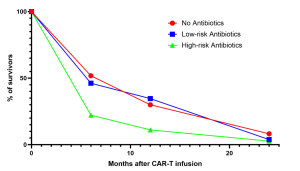
To try and predict the response to CAR-T cell therapy, the authors excluded patients who were exposed to the high-risk antibiotics and found a subset of microorganisms (Bacteroides, Ruminococcus, Eubacterium, and Akkermansia) that were strongly associated with the response of the CAR-T cell therapy.
Not so fast
While the publication is fascinating and helps us understand the role the microbiome has on disease and treatment, the study is observational and cannot establish a causal relationship between the gut microbiome and the response to CAR-T cell therapy. It is also noted that patients who were on high-risk antibiotics may have had a higher disease burden which could skew the results. An area for further research would be to investigate the mechanisms through which the gut microbiome influences the response to CAR-T cell therapy. Future work could also consider the potential effects of other medications the patients might have taken.
Why does it matter?
CAR-T cell therapy holds immense promise as a revolutionary cancer treatment, particularly for haematologic malignancies resistant to traditional interventions and diseases like non-Hodgkin lymphoma, where half a million new cases and nearly quarter of a million deaths were reported around the world in 2018. Many haematologic malignancies have very poor survival rates, and anything that can be done to increase the effectiveness of treatment will be critical. The US FDA has approved CAR-T cell therapies for certain rare cancers, including follicular lymphoma, B-cell non-Hodgkin lymphoma, B-cell acute lymphoblastic leukaemia, and Mantle Cell lymphoma, bringing new hope to those working to treat rare diseases.
Take home messages
1. Certain ‘high-risk’ antibiotics may impede the effectiveness of CAR-T cell therapy.
2. Specific gut microorganisms that are strongly associated with the response to CAR-T cell therapy may exist, potentially offering a predictive tool for treatment outcomes.
3. While the study offers some fascinating insights, it is observational and cannot establish a causal link.
Guest author: Conor McQuaid, PhD
This article was written as part of a series of ‘journal club’ summaries for Scientific Writers Ltd., and is based on the following publication.
First Author: C K Stein-Thoeringer, et al.
Journal: Nature Medicine
Date online: 13 March 2023
Other references
- https://www.nature.com/articles/s43018-023-00662-4https://www.nature.com/articles/s41380-022-01479-w
- https://www.science.org/doi/full/10.1126/science.abc3421?casa_token=b8GjT3v7-OsAAAAA%3AotsdoRnFAhK8cVjOS7hUfgPzHmpu2imiMyz4stO27fENZcUbsBjf29His9bIUXclfOr-jQ14LcCPnA
- https://acsjournals.onlinelibrary.wiley.com/doi/full/10.3322/caac.21492
- https://molecular-cancer.biomedcentral.com/articles/10.1186/s12943-023-01720-2
Thank you for reading and subscribing. Your support is appreciated.