Plastics are not only choking the planet – what are they doing to our bodies?
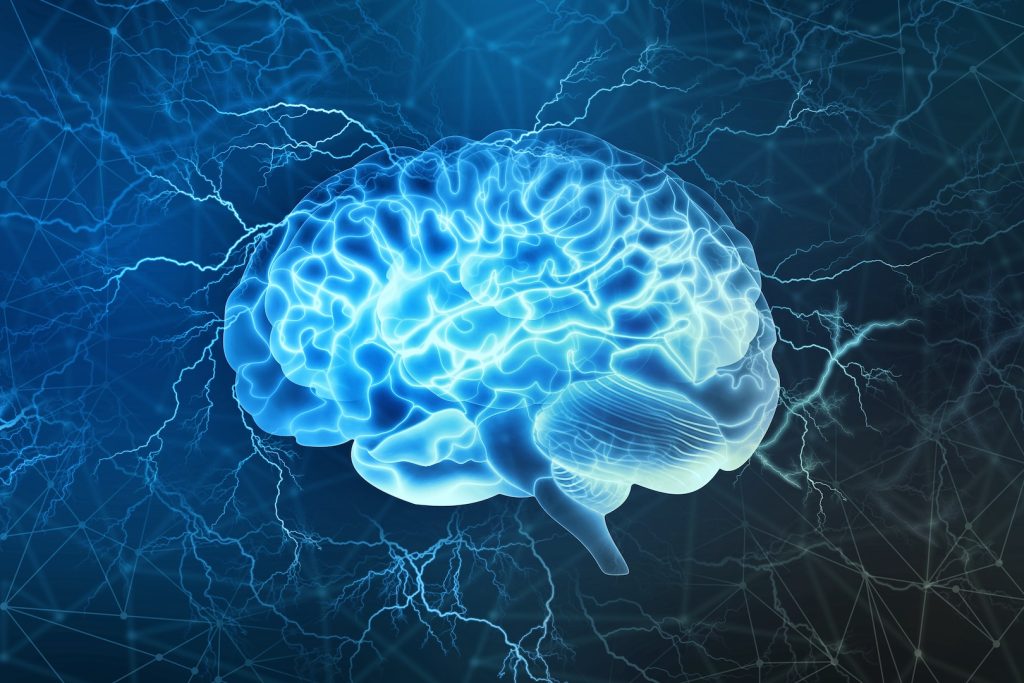
Plastic is everywhere; it is a triumph and curse of the 20th century and a wonder of the industrial age that proliferates every aspect of modern life. However, recent evidence shows that plastics are not only entering our bodies, but they may be associated with a degenerative and debilitating disorder – Parkinson’s disease (PD).
Plastic is a problem
Plastic is a real problem for humanity; the great Pacific garbage patch is so large, 1.6 million km², that it is nearly seven times the area of the UK. Plastics are robust and do not break down quickly, so much so that microplastics (particles of <5 mm diameter) have been found on the summit of Everest and the bottom of the Mariana Trench.
Most plastics do not biologically degrade, but photo-degrade, remaining for a prolonged time in the environment. Scientists have been aware for decades that plastics undergo continuous fragmentation in the environment, breaking down over time into fibres smaller than a strand of human hair – particles so minuscule that they can easily become airborne nanoplastics, a term used more recently to describe particles of less than 1 μm.
Mechanism of action
A fascinating study published in Science Advances by a group from Duke University in the USA, found that nanoplastic can accelerate the spread of seeded pathological α-synuclein in the mouse brain. The group made anionic nanoplastics, particles that carry a net negative charge (in this case polystyrene) and measured the interaction with cultured mouse neurons.
Investigators found the anionic nanoplastics promoted α-synuclein pathology in these cells. Nanoplastics were internalised in neurons within a few hours, but after 12 hours, the plastic in the neurons was localising in the cell’s lysosome. The research also showed that anionic nanoplastic contaminants can cause mild neuron lysosomal impairment and attenuate exogenous α-synuclein fibril degradation.
The study concluded that the presence of nanoplastic contaminants in the environment could potentially contribute to the development of neurodegenerative diseases like PD.
Not so fast
While this is a very well-produced study, there are always issues with the use of in vitro experiments and mouse models, which may not fully replicate complex human biological and environmental interactions.
Results from such models may not translate directly to human health outcomes. The study also does not clearly assess real-world exposure levels to these nanoplastics. It is still being determined whether the concentrations used in the experiments reflect the levels that humans or animals might be exposed to in the environment.
Why does it matter?
Up to 90% of PD cases are classified as sporadic, and there is a small minority with characterised genetic links. The prevalence of PD has doubled in the past 25 years, with global estimates in 2019 of more than 8.5 million individuals living with the disease.
With so little known about the exact cause or disease progression, the role of nanomaterials acting as a propagator of α-synuclein raises questions about other protein aggregate disorders like Huntington’s and Alzheimer’s disease.
Take Home Messages
1. Plastic is ubiquitous and is getting into our bodies.
2. Nanoplastics can accelerate the spread of a-synuclein in the mouse brain.
3. The study contains limited human data; however, the hypothesis that nanoplastics contamination could be linked to Parkinson’s disease requires further research.
Guest author: Conor McQuaid, PhD
This article is the first in a series of ‘journal club’ summaries written by guest authors for Scientific Writers Ltd., and is based on the following publication:
Title: Anionic nanoplastic contaminants promote Parkinson’s disease–associated α-synuclein aggregation
First Author: Zhiyong Liu, et al.
Journal: Science Advances
Date online: 17 November 2023
Other references
https://www.nature.com/articles/s41598-018-22939-w
https://www.who.int/news-room/fact-sheets/detail/parkinson-disease
https://www.parkinson.org/understanding-parkinsons/causes/genetics