The Tai Chi effect on nonmotor symptoms in Parkinson’s disease
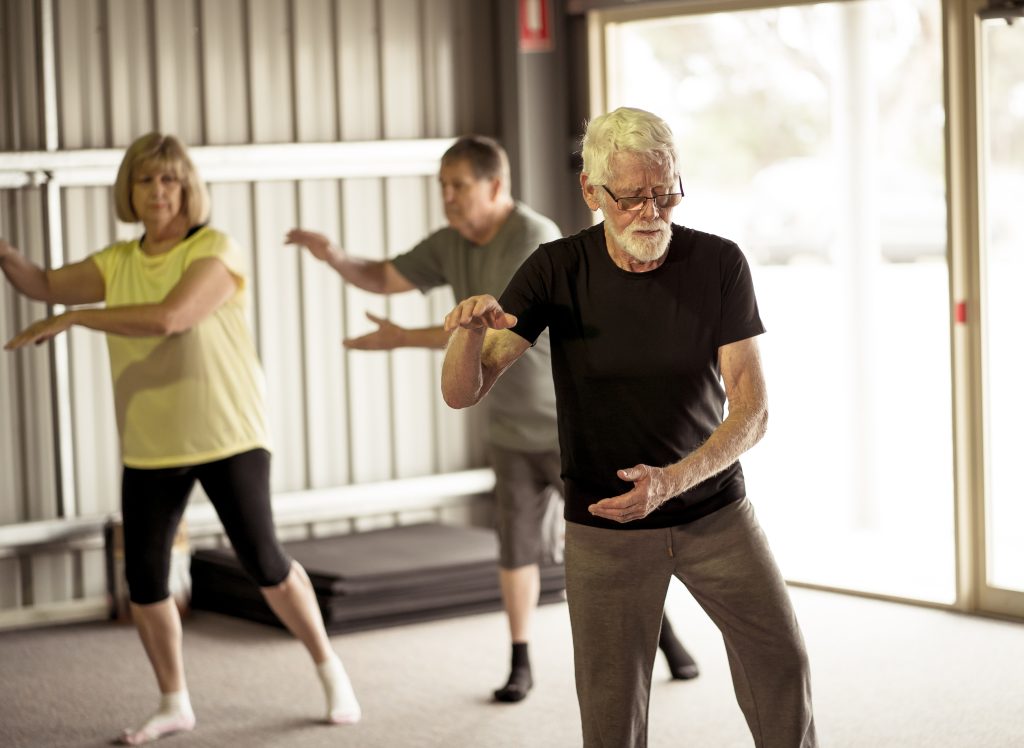
For centuries, the ancient art of Tai Chi has been revered for a claimed myriad of health benefits, from enhancing balance and alleviating anxiety to safeguarding against cardiovascular ailments. A recent study looks at the impact of Tai Chi on nonmotor symptoms (NMS) in patients with Parkinson’s disease (PD) over a one-year period.
What they uncovered
The study was a randomised controlled trial that initially involved 95 early-stage patients divided into three groups – Tai Chi, brisk walking, and controls with assessments at baseline, 6 months, and 12 months. Investigators looked at the effects of Tai Chi on cognition, sleep, autonomic symptoms, anxiety/depression, and quality of life using rating scales. They also examined potential mechanisms through fMRI, metabolomics, plasma cytokine and blood Huntingtin interaction protein 2 (HIP2) mRNA levels.
The Tai Chi group showed significant improvements in nonmotor functions, especially for cognition and sleep as evaluated by the PD Cognitive Rating Scale (PDCRS) and Epworth Sleepiness Scale (ESS) compared with the control group. Additionally, Tai Chi demonstrated advantages over brisk walking in enhancing NMS-Quest and ESS scores.
Tai Chi was also associated with improved brain function and an enhanced somatomotor network, determined using fMRI which correlated with improved PDCRS scores. These fMRI results indicate that Tai Chi may enhance brain network function related to nonmotor symptoms in Parkinson’s disease.
The study demonstrated that the downregulation of eotaxin and upregulation of brain-derived neurotrophic factor (BDNF) were positively correlated with improved cognitive function in the Tai Chi group. Metabolites linked with energy and immune function were also associated with improvement in PDCRS scores and it was suggested that elevated HIP2 mRNA levels post-Tai Chi training may influence mitochondrial functions and protect dopaminergic neurons from neurodegeneration.
Not so fast
While this study provides valuable insights, it underscores the necessity for further research with larger sample sizes and more diverse populations (all the participants in the study were of Han ethnicity from China) to validate findings and fully explore Tai Chi’s potential as a therapeutic intervention for Parkinson’s disease.
One interesting observation is that the walking and control group numbers dropped from 31 to 17 and from 32 to 17, respectively, while the Tai Chi group numbers remained unaffected. Additionally, the improvement felt by the participants in the Tai Chi group coupled with the social aspect of these exercise classes may have contributed to higher adherence rates.
Delving into the specific components of Tai Chi practice that contribute to these observed benefits could perhaps aid more effective tailoring of interventions for patients.
Why does it matter?
The study concludes that Tai Chi has a marked improvement on nonmotor symptoms in PD patients, particularly regarding cognition and sleep. These improvements were associated with enhanced brain network function, reduced inflammation, and improved energy metabolism. The findings suggest that Tai Chi could serve as an effective addition to pharmaceutical-based treatments for PD nonmotor symptoms, offering a promising avenue for further research and clinical application.
Take home messages
1. Tai Chi shows promise in alleviating nonmotor symptoms of Parkinson’s disease.
2. Possible mechanisms to explain the observed benefits of Tai Chi include reduced inflammation and oxidative stress biomarkers.
3. No adverse events were reported in the Tai Chi group, and it would appear to be a safe activity for patients with early-stage Parkinson’s disease.
Guest author: Conor McQuaid, PhD
This article was written as part of a series of ‘journal club’ summaries for Scientific Writers Ltd., and is based on the following publication:
First Author: Gen Li et al.
Journal: Parkinsonism and Related Disorders
Date online: 12th January 2024