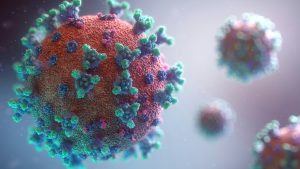
t feels like we have overcome the worst of COVID as a society, with the World Health Organization (WHO) declaring an end to the global public health emergency for this disease on 5 May 2023. Since then, COVID and its long-term effects may have dropped out of our collective memory, but an incredible new study from a research group in Dublin, Ireland shows that we still need to pay attention.
COVID is primarily a respiratory infection, and at the beginning of the pandemic, it seemed to have only a few neurological symptoms other than anosmia (loss of smell). As more and more data emerged about the development of the infection, it became clear that there is an acute phase, which can lead to a longer, more chronic phase known as long COVID.
A major symptom of long COVID is ‘brain fog’, which is characterised by headache, fatigue, malaise and altered levels of consciousness. A retrospective study published in the Lancet examining neurological complications in 236,379 patients within six months of a COVID diagnosis found that around one-third of patients demonstrated clinically important neurological or psychiatric dysfunction.
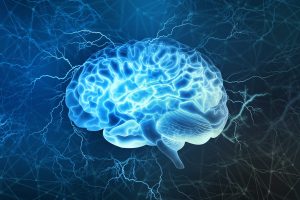
In the informative Nature Neuroscience paper summarised here, the researchers noted similarities between these long COVID symptoms and symptoms of post-concussive syndrome, suggesting a similar mechanism of the underlying neurological issues. The study investigated whether long COVID is associated with dysfunction in the blood-brain barrier (BBB), a tightly regulated barrier controlling what enters and exits the brain tissue into the circulating blood.
The long and the short of it
Study participants were observed under different conditions. An acute COVID cohort consisted of 76 patients hospitalised with acute COVID in early 2020. A long COVID cohort involved 33 participants who had recovered from COVID in early 2020, had not been hospitalised or treated with antivirals, and reported mild symptoms. Of these 33 participants, 10 were classed as fully recovered, 11 had long COVID, and 11 had long COVID and ‘brain fog’.
In the acute COVID cohort, researchers collected serum and plasma samples which were compared with 25 unaffected control samples collected before the pandemic. These serum samples were examined for known biomarkers of BBB disruption.
In this part of the study, the team discovered that samples from patients who self-reported ‘brain fog’ contained significantly higher levels of a protein called S100β than from patients without this symptom or who had not had COVID-19. The S100β protein is often found in astrocytes, a type of cell that wraps around the vessels in the brain and forms a key part of the BBB.
For the second part of this study, the long COVID cohort underwent dynamic contrast-enhanced magnetic resonance imaging (DCE-MRI) of the brain. These scans showed that the barrier between the brain and the blood had been weakened or damaged in patients who had long COVID with ‘brain fog’ up to one year after initial infection with the SARS-CoV-2 virus.
Not so fast
This study has some limitations, including a small sample size. There was also a lack of information on the control group, making it difficult to compare the results with a healthy population. The study did not examine longitudinal changes in BBB function in the cohort of patients with long COVID. It will be important to determine how long it takes for individuals to recover and if there is a resolution of BBB function and prolonged inflammation. The researchers further suggest that future studies with larger patient cohorts should perform unbiased proteome profiling on blood and cerebrospinal fluid (CSF) samples.
Why does it matter?
The study points to the disruption of the BBB playing a role in people suffering from long COVID with ‘brain fog’. It also suggests that DCE-MRI and serum sampling could be used to diagnose this dysfunction in affected individuals. There is already considerable work underway to repair and improve the dysfunctional BBB, as this is a hot topic in the development of therapies for numerous other neurodegenerative diseases such as Alzheimer’s and Parkinson’s disease.
Take home messages
1. The longer, chronic phase of COVID (long COVID) is associated with ‘brain fog’, which can persist for months or even years after the initial acute COVID infection.
2. Long COVID with persistent ‘brain fog’ is linked to BBB disruption.
3. People who self-reported ‘brain fog’ had higher levels of the S100β protein found in astrocyte cells that stabilise and regulate the BBB.
Guest author: Conor McQuaid, PhD
This article was written as part of a series of ‘journal club’ summaries for Scientific Writers Ltd and is based on the following publication.
First Author: Greene, C et al.
Journal: Nature Neuroscience
Date online: 9 January 2024
Other references: https://www.thelancet.com/journals/lanpsy/article/PIIS2215-0366(21)00084-5/fulltext