Are ultra-processed foods affecting your brain as well as your waistline?
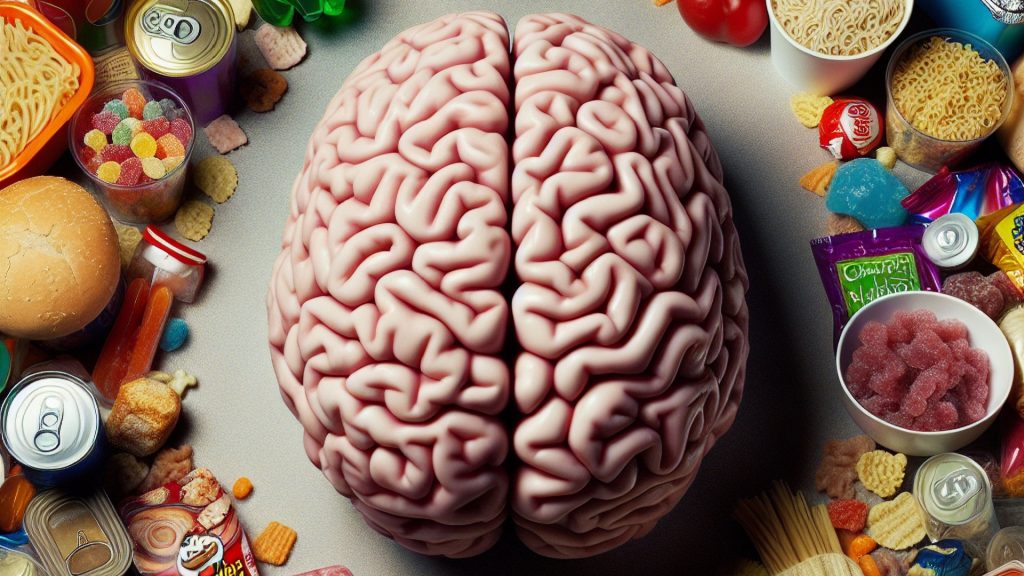
In today’s fast-paced world, ultra-processed foods (UPFs) have become a dietary staple for many, offering convenience and taste at the expense of nutrition. But beyond their impact on waistlines, emerging research reveals a possibly more insidious consequence – a detrimental effect on brain health. In this week’s Evidence Base, we explore a recent publication from Bhave et al. examining the relationship between UPF consumption and adverse brain health outcomes, specifically cognitive impairment and stroke.
The set up
This prospective, observational cohort study uses data from the reasons for geographic and racial differences in stroke (REGARDS) project. It is a USA national, population-based, longitudinal study of incidents of stroke and associated risk factors, which includes over 30,000 Black and White adults aged 45 years or older. It is meaningful because of the participants’ diversity, which helps understand how different populations are affected by stroke and cognitive impairment. It is important to note that processed food is an often-used term in media but is rarely well-defined. In this article, UPF is defined as “the presence of processed food substances never or rarely used in kitchens and additives designed to make final products more palatable or appealing.”
The skinny of it
The researchers found that a 10% increase in the relative intake of UPFs was associated with a 16% higher risk of cognitive impairment (Hazard Ratio [HR] = 1.16) and an 8% higher risk of stroke (HR = 1.08). Conversely, they found that a higher intake of unprocessed or minimally processed foods was linked to a lower risk of cognitive impairment (HR = 0.88) and stroke (HR = 0.91). The effect of UPFs on stroke risk was more pronounced among Black participants compared to White participants, indicating a significant UPF-by-race interaction. The researchers also found that an association between UPF consumption and adverse neurologic outcomes was independent of adherence to commonly recommended diets such as the Mediterranean, DASH, and MIND diets.
Not so fast
The study’s reliance on self-reported dietary data introduces potential bias and inaccuracies, as participants may only sometimes recall or report their food intake accurately. To help ensure the integrity of the results, participants with incomplete or implausible dietary data were excluded. However, inaccuracies could still be present in the dataset, limiting the findings’ broader applicability. In addition, since this was an observational study, only associations can be identified from the data, not causation, leaving room for unaccounted confounding factors. Another issue is that although the study has more diverse participants than previous studies, it still focused on non-Hispanic Black and White adults, which may restrict the relevance of its conclusions to other racial and ethnic groups.
Why does it matter?
Overall, the research underscores the potential effects of the quality of food and its consumption on brain health, indicating that lowering UPF consumption might support cognitive function and reduce the risk of stroke, particularly in certain racial groups. However, additional studies are necessary to confirm causality and investigate the mechanisms driving these observed associations.
Take home messages
1. A 10% increase in the relative intake of ultra-processed food leads to a higher risk of cognitive impairment and stroke.
2. The effect of UPFs was more pronounced among black participants compared to white participants.
3. Although the study is observational and limited to self-reporting, it shows associations that UPF negatively impacts the human body.
Guest author: Conor McQuaid, PhD
This article was written as part of a series of ‘journal club’ summaries for Scientific Writers Ltd and is based on the following publication.
Title: Associations Between Ultra-Processed Food Consumption and Adverse Brain Health Outcomes
First Author: Bhave V, et al.
Journal: Neurology
Date online: 11 June 2024
Other references