MRI timing in stroke care, improving outcomes and reducing hospital stays
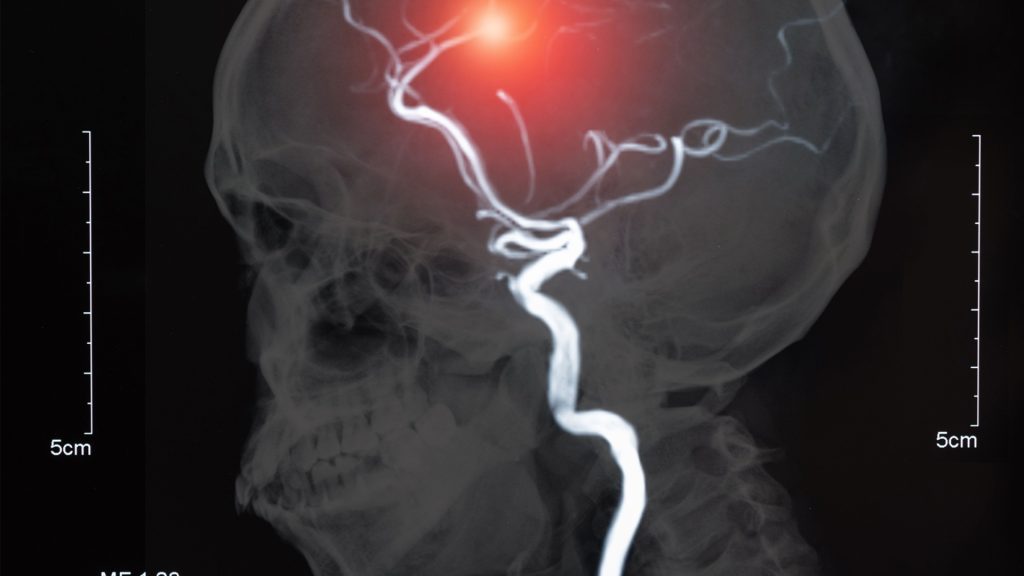
A stroke is a terrifying event, but now a group of Canadian researchers claim they have found a way to improve and speed up the recovery time from ischaemic strokes.
Type and severity
There are two main types of strokes, ischaemic stroke (IS) and haemorrhagic stroke (HS), with ischaemic attacks making up the majority of events (80%). IS are caused by a blockage such as a blood clot, which interrupts or reduces blood flow to a part of the brain. These ischaemic attacks can have different levels of severity, ranging from a transient ischaemic attack (TIA) often referred to as a ‘mini-stroke’, and increasing in severity to mild then moderate and severe IS.
Breaking it down
The research was a retrospective registry-based study that spanned from January 2015 to December 2019 at the QEII Health Centre in Halifax, Nova Scotia, Canada. This specific time period was selected to minimise any impact that the COVID-19 pandemic might have had on MRI accessibility. Initially, 804 TIA and IS patients admitted during the time frame were evaluated and this number was reduced to 771 after the study’s exclusion criteria were applied (age, incomplete data for linkages, etc.). The study group of 771 participants was then divided into early (305) and late (446) MRI received groups – ‘early’ being defined as patients who received a brain MRI within 48 hours of the event.
What they found
The study revealed that early MRI use in IS patients had several positive outcomes. Patients who underwent early MRI had a 58% lower rate of symptomatic changes in neurological status during hospitalisation (adjusted odds ratio 0.42), indicating a reduced likelihood of experiencing complications or a worsening of their condition. This lower rate of symptomatic change implies that early MRI may aid in better management of stroke patients, potentially leading to a more stable recovery. Early MRI patients also had a 55% higher probability of good functional outcomes at discharge (odds ratio 1.55), a 35% lower rate of non-home discharge (odds ratio 0.65), and a shorter length of stay (regression coefficient 0.93). Early use of MRI also reduced direct costs of hospitalisation (regression coefficient 0.77). Together, these results suggest that early MRI use not only improved patient outcomes but also decreased healthcare resource use, indicating potential benefits for clinical and economic aspects of stroke care.
Not so fast
The study’s retrospective design does present several limitations. Firstly, it limits the establishment of a causal relationship between early MRI use and improved patient outcomes due to the inability to control for all potential confounding factors. There is also a potential for selection bias as patients were not randomly assigned to early or late MRI groups, and the decision to perform early MRI may have been influenced by factors not fully captured in the study. The exclusion of patient data, such as those with incomplete information or MRI timestamps outside the hospital stay, could also have introduced bias by omitting potentially important cases.
Secondly, the study’s results are limited by the single-centre design. and although it provides consistency, the setting in Nova Scotia may not be directly applicable to other healthcare environments with different resources, protocols, or patient populations. The paper also notes that access to MRI in the Canadian healthcare system is usually constrained, which may not be the case elsewhere.
Why does it matter?
This study suggests that early MRI utilisation in IS patients is associated with improved outcomes. Further research is needed to confirm the impact of this study, particularly prospective randomised controlled trials, to establish a more robust causal relationship. Validation of these findings would potentially lead to improved stroke care and resource application in healthcare systems.
Take home messages
1. Early MRI (within 48 hours of attack) of ischaemic stroke patients was associated with better outcomes, including lower rates of neurological complications.
2. There may be clinical and economics benefits of early MRI use in stroke care.
3. The study’s retrospective design and single-centre focus highlight the need for further research, particularly prospective randomised controlled trials.
Guest author: Conor McQuaid, PhD
This article was written as part of a series of ‘journal club’ summaries for Scientific Writers Ltd and is based on the following publication.
First Author: Kumar M, et al.
Journal: Journal of Stroke and Cerebrovascular Diseases
Date online: 27 February 2024
Other references