AI-human research collaboration emerges as a viable option for interdisciplinary science projects.

Competitive research relies on the intellectual enrichment of research groups and their collaboration across different disciplines. However, constituting and running an efficient research group is an arduous task, just as it is for any human work group. Collaborating across various disciplines is also challenging due to communication barriers and the existence of varying criteria. The hurdles are magnified for under-resourced groups, which often lack dedicated funding for interdisciplinary research.
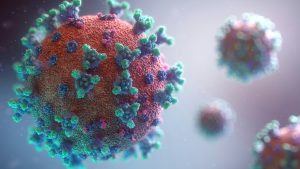
To address these research challenges, Swanson et al. (2024) implemented a profound change in the composition and dynamics of research groups by incorporating large language models (LLMs), with AI agents assuming different roles on a research team. A sole human researcher was responsible for providing high-level feedback to the AI agents. They named the research group Virtual Lab and, as a proof of concept, the group designed 92 new nanobody structures, two of which emerged as exciting candidates in the SARS-CoV-2 research field.
Meet the virtual lab team
For several years LLMs such as ChatGPT have been tackling scientific questions satisfactorily, at times even outperforming humans. However, engaging in elaborate research that involves multi-step reasoning across varying scientific fields is entirely different. The Virtual Lab aimed to overcome these complexities by using a human researcher to guide a set of interdisciplinary AI agents.
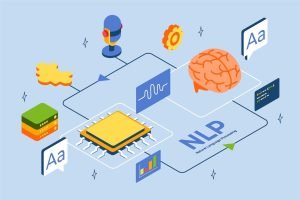
The AI agents were run by an LLM that powered their scientific reasoning abilities with instructions that directed each agent’s scientific expertise and interactions with the rest of the team. To prove its abilities, the Virtual Lab set out to solve a high-impact, real-world scientific problem: designing new nanobody alternatives that could bind to the latest variant of SARS-CoV-2.
Three main workflows were defined: one destined for designing agents, a second for team meetings among the agents, and a third for individual meetings (please refer to Figure 1 in the manuscript for further details).
In the first workflow, the human researcher specified the criteria to define a principal investigator (PI) agent and a scientific critic agent, and then provided a brief description of the project. Based on this, the PI agent automatically created several scientist agents to work on the project, specifying their title, expertise, goal, and role.
For team meetings, the human researcher wrote an agenda defining the topic of discussion. From this point, the AI agents stepped in: the PI agent began the meeting by providing initial thoughts and questions as a guide for the remaining agents. Then, each scientist agent provided its response, followed by a critique by the scientific critic agent. The PI agent then summarised the discussion and asked follow-up questions. Finally, after several rounds of discussion, the PI agent provided a final answer regarding the topic of discussion.
Similarly, for individual meetings, the human researcher specified the topic of discussion. The scientist agent involved in the meeting responded and was then critiqued by the scientific critic agent. In each round, the scientist agent refined its answer based on the critique, and ultimately, after multiple rounds, the scientist agent provided its concluding, improved answer.
The results
The Virtual Lab achieved the proposed goal of engaging in sophisticated, interdisciplinary science, developing an innovative nanobody design workflow. It incorporated the protein language model ESM, the protein folding model AlphaFold-Multimer, and the computational biology software Rosetta.
The PI agent settled on working with a team composed of individual AI agents specialised in computational biology, machine learning, and immunology. Together with the scientific critic agent, they collaborated to mutate existing nanobodies that bind the original strain of SARS-CoV-2. They also generated 92 new alternative structures.
In this process, the required human input was minimal, with the human researcher writing 0.5% of the exchanged words. However, this input proved to be vital, as it was the human’s role to choose readily available computational tools and introduce constraints in experimental validation. At a later experimental stage, 90% of the generated nanobody structures were successfully recombinantly expressed and soluble in an Escherichia coli expression platform. Furthermore, two of these novel nanobodies present unique binding profiles.
Not so fast
While promising, the Virtual Lab presents several limitations inherent to the current generation of LLMs. First, the models are trained on scientific literature and code data up to a specific date cutoff, failing to suggest the very latest tools. This problem was overcome thanks to human intervention, with the human researcher suggesting relevant information and documentation. Second, AI agents tend to avoid making difficult decisions unless prompted. The framework relies heavily on predefined prompts and human oversight to ensure the production of valuable outputs.
Why does it matter?
The Virtual Lab establishes that AI-human collaboration can effectively address complex scientific challenges. By designing nanobody binders for SARS-CoV-2 variants, Swanson et al. showcased the potential for impactful real-world applications in biotechnology and beyond. Future directions will include expanding its use across other interdisciplinary fields and refining its architecture for autonomous operation.
Take-home messages
1. The Virtual Lab facilitates scientific collaboration, eliminating the need to assemble and coordinate large teams of human experts.
2. Human intervention was minimal yet vital to the success of this AI-driven workflow.
3. The Virtual Lab achieved a powerful result, producing 92 new nanobody structures capable of binding SARS-CoV-2. This result was further validated in the wet lab, with two of the novel nanobodies presenting unique SARS-CoV-2-binding profiles.
Guest author: Celina Galles, PhD
Reviewer: Barbara Fahmy, MS OTR, MPA
This article was written as part of a series of ‘journal club’ summaries for Scientific Writers Ltd and is based on the following publication.
Title: The Virtual Lab: AI Agents Design New SARS-CoV-2 Nanobodies with Experimental Validation
First Author: Swanson, K.
Journal: bioRxiv preprint
Date online: November 12, 2024