The menstrual cycle over time: What changes, when it changes, and why it matters
Throughout their lives, women experience hormonal and physiological changes in their menstrual cycle. A woman typically experiences approximately 400 menstrual cycles during her lifetime, which can considerably impact aspects of her health and quality of life. Many women struggle to understand what is considered “normal” and what to expect at various stages of life.
Previous studies have provided some insight regarding the hormonal and physiological changes that women experience throughout their reproductive life cycle. Small sample sizes, inadequate age ranges, and a lack of population diversity limited the scope of these investigations.
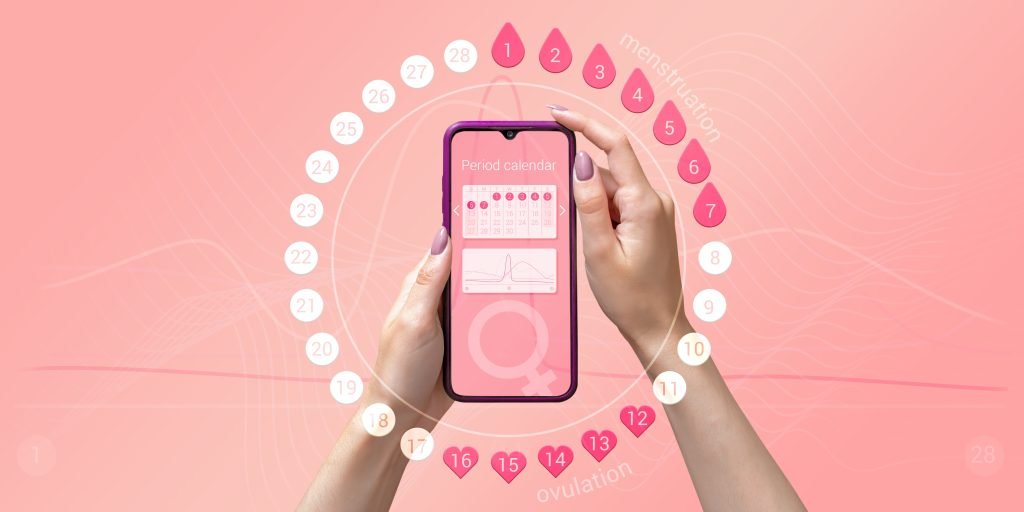
Cunningham et al. collected data from over 19 million women aged 18 to 55 who used a global digital application called Flo. The Flo app allows women to track changes in their menstrual cycle and related symptoms over time. The study revealed clear age-associated patterns in menstrual cycle length (the number of days between periods) and bleeding duration. The results also yielded extensive detail on the type and frequency of menstrual symptoms (e.g. headache, cramps) in different age groups.
The women behind the data
This self-report, large, cohort study included 19 266 573 women users of the Flo app aged 18 to 55 years. The researchers excluded women who used contraception reminders, were in pregnancy mode, and registered at least 3 cycles shorter than 10 days. Age ranges were divided as follows: 18-25, 26-30, 31-35, 36-40, 41-45, 46-50, 51-55 years.
Women recorded their periods and symptoms over 12 months, between December 11, 2022, and December 11, 2023. A large percentage of Flo app users were between 18 and 25 years old (45.5%) and had a body mass index (BMI) within the range of 18.5 to 24.9 (53%). The mean cycle length was 28.54 days, and the mean period length (bleeding days) was 5.20 days.
Most women presented with regular cycles (82%), while 18% had irregular cycles. Participants were considered to have irregular menstrual cycles if (over the 12-month study period) the difference between the longest and shortest cycle was greater than 7 days. Please refer to Table 1 in the manuscript for more details.
What the data revealed about the menstrual cycle, period length, and symptoms
From the initial cohort of over 19 million, approximately 12 million Flo app users logged symptoms relevant to this particular study. Researchers observed that cycle and period lengths change with age, but not in a linear manner. Women around 21-22 years had the longest cycles, with the length decreasing until around age 45, when the cycle length and variability increased again.
Between 18 and 25 years old, while menstrual cycles are still establishing, period lengths tended to be longer and show variability. In the early 30s to mid-40s, cycles were shorter, and period lengths were more regular. After around the age of 45, period length and variability increased, reflecting the transition to menopause. Please take a look at Figures 1 and 2 in the manuscript for more information on the menstrual cycle and period length.
Somatic symptoms assessed included cramps, tender breasts, headache, fatigue, backache and acne. Women in their late 20s and early 30s frequently reported tender breasts and fatigue. Cramps and acne seemed to decrease with age, while headaches and backache became more frequent in older women.
Digestive symptoms included bloating, nausea, constipation and diarrhoea. Overall, bloating was the most common digestive symptom across all ages, occurring 3.6 times more frequently than constipation. Constipation was reported more frequently by older women than by those in the other age groups.
Researchers explored mood-related symptoms that were positive (happy and energetic), as well as negative (stress, confusion, depression, insomnia, mood swings and obsessive thoughts). Mood swings peaked in the youngest and oldest users, in contrast with stress and insomnia, which were higher in older users.
Lastly, reports of creamy, watery and sticky vaginal fluid were consistent until around age 47, when they became more variable and frequent. Please refer to Figure 4E in the manuscript for more information on symptoms.
Not so fast
Although this is a large study that sheds new light on menstrual patterns, it has some limitations. Women self-reported the data, which can lead to inaccuracies, errors and forgetting to enter information on the Flo app. Even though users who tracked birth control were excluded, researchers were unable to verify if women were using contraceptives during the time of the study. Also, there’s no specific information on the ethnicity or location of Flo app users. Most users were aged between 18 and 25, which may have skewed the results. Finally, common menopausal and perimenopausal symptoms such as brain fog, night sweats and hot flashes were not recorded because these symptoms were not listed on the Flo app.
Why does it matter?
This study sheds light on various menstrual patterns among females across the reproductive lifespan. Many women still find it hard to understand their cycle and sometimes are confused about what is considered “normal” versus “not normal” at different ages.
Notably, the study included over 400 000 women between the ages of 46 and 55 years who are often excluded from similar studies. This advantage offers essential insights about aging menstruators, and these findings have the potential to improve medical care, resulting in better quality of life and health outcomes for women.
Take-home messages
- The menstrual cycle evolves as women age, and it remains to be fully understood to help women distinguish between typical menstrual symptoms and those that warrant concern.
- Cycle length is not fixed; it shortens gradually from 20s to 40s, then lengthens again before menopause.
- Symptoms during the menstrual period vary across different ages. Younger women have more cramps and tender breasts, whereas older women experience cramps and headache.
- Expanded knowledge of menstrual patterns may help women better understand when to seek treatment and advise healthcare providers on when treatment may be beneficial.
Guest author: Laura K. Urbina Jara, PhD.
Reviewer: Barbara Fahmy, MS OTR, MPA
This article was written as part of a series of ‘journal club’ summaries for Scientific Writers Ltd and is based on the following publication.
Title: Chronicling menstrual cycle patterns across the reproductive lifespan with real-world data
First Author: Cunningham A., et al.
Journal: Scientific Reports.
Date online: 03 May 2024