Chemotherapy is beneficial and widely used for cancer treatment, but can cause neurological side effects in patients. A main concern is chemotherapy-related cognitive impairments (CRCI). These impairments can affect patients’ quality of life and make it challenging to follow treatment plans, which leads to poorer outcomes. Understanding the underlying physiological mechanisms of CRCI will help researchers and clinicians develop early interventions and therapeutic strategies that aim to mitigate the adverse effects of chemotherapy.
Yang and collaborators wanted to know how neoadjuvant chemotherapy (NAC) affected the brain connectivity of patients with breast cancer (BC). In this study, they explored the impact of NAC on emotion and cognition. Patients were subdivided by clinical classification, including menopausal status, BC subtype, and treatment. The results showed that NAC affects brain function, altering patients’ cognitive function and emotional processing.
About the women in this study
Between December 2020 and November 2021, 55 females were recruited for this study according to the following criteria:
– Individuals were prepared to receive NAC before surgery
– Individuals were right-handed
– Patients received a first diagnosis of BC between 30 and 70 years of age
– Patients had stage II-III BC at diagnosis
Patients underwent MRI scans at three time points (TP): TP1, one week before the first NAC; TP2, after the first NAC cycle; and TP3, at the end of NAC before surgery. Two control groups were formed, consisting of healthy individuals. The healthy control group 1 included 20 women, with an average interval between TP1 and TP2 of 30 days. The healthy control group 2 consisted of 18 women with an average interval of 137 days between TP1 and TP3.
Women with different BC subtypes participated in the study, including luminal A (n=14), luminal B (n=13), and HER2-positive (n=28). No patients with triple-negative BC were included. Of the 55 women, 33 received anthracycline-based therapies, and 22 received targeted therapies along with chemotherapy. Among patients, 19 were menopausal, and 20 were non-menopausal. For more detailed information about the women in the study, please refer to Tables 2 and 3 of the manuscript.
What the data revealed
Clinical differences observed in patients: Results of clinical assessments differed across patients and tests, and not all differences were statistically significant. For the test of Perceived Cognitive Abilities (PCA) the scores decreased significantly from TP1 (20.08 ± 4.40) to TP2 (18.56 ± 3.40) and later to TP3 (18.09 ± 3.66), suggesting that patients experienced worse cognitive abilities as chemotherapy treatment progressed. The Self-Rating Anxiety Scale showed a decreasing trend across the three time points, TP1 (23.79 ± 4.89), TP2 (22.41 ± 4.07), and TP3 (21.97 ± 2.70), but the difference was not statistically significant.
Across all tests, no significant changes were observed in either healthy control group (1 or 2). Patients had a statistically significant lower baseline score on the Verbal Fluency Test than both the healthy control group 1 (p=0.038) and group 2 (p=0.003). Similarly, the BC group obtained lower scores on the Digit Span Backwards test, a measure of working memory, than the healthy control group 2(p=0.003).
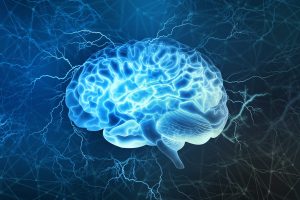
Changes observed in the brain: The MRI scans revealed some changes in the brain network at both global and nodal levels. At baseline, both patients and controls showed a normal (small world) brain topology with a high clustering coefficient. At the global level, at follow-up after NAC, patients in the BC group exhibited a more randomised brain network pattern rather than a small world pattern at both TP2 and TP3. The authors suggest that this shift towards a more randomised network could affect how the information is transferred, which might be seen as a slower speed of information processing.
At the nodal level, researchers observed discrepancies between BC patients at TP2 and TP3 compared with TP1 in specific brain regions, including the cerebellum and the frontal-limbic system. They explain that these regions are essential for cognitive functions and the regulation and processing of emotions. Interestingly, the volume of these regions in the brain did not change, and the authors suggest that, after patients receive NAC, the changes in the functional network occurred before the structural changes, indicating that, as chemotherapy treatment continues in BC patients, so do the changes that alter the brain functional connections.
Not so fast
This study provides valuable information on how chemotherapy reshapes the brain in patients with BC, but it has some limitations. The sample size was small (N=55), and no triple-negative BC patients were included. There was no control group of BC patients who did not receive NAC, so the observed brain changes could not be attributed solely to chemotherapy. Also, researchers used a subjective approach to assess the cognitive functions, which may introduce bias into the data.
Why does it matter?
This study gives additional insight into the brain changes that women with BC who receive NAC can experience. A major side effect of chemotherapy is cognitive impairment that affects quality of life and patient survival. The physiological mechanisms of CRCI are not fully understood, and this investigation analyses the entire brain functional network (connectome), providing data on early and progressive brain changes at three different time points. MRI scans, self-report, and testing tools reveal that women undergoing NAC experience impaired memory and emotion processing. As a result, these findings shed light on the additional challenges faced by women with BC and may serve as a baseline for future research on post-chemotherapy cognitive effects, their early detection, and intervention.
Take home messages
1. Chemotherapy in BC patients can have a negative impact on the brain and affect quality of life even after the first treatment cycle. This negative impact may persist or worsen over time.
2. The results showed impaired cognition and emotion control as the most common effect, which may be a result of the altered connections in the brain caused by chemotherapy.
3. To understand the impact of chemotherapy on the brains of women with BC, more studies are needed that include all BC subtypes and follow longer periods of time.
Guest author: Laura K. Urbina Jara, PhD.
Reviewers: Barbara Fahmy, MS OTR, MPA; Allison Kirsop, PhD
This article was written as part of a series of ‘journal club’ summaries for Scientific Writers Ltd. and is based on the following publication.
First Author:Yang J., et al.
Journal: Journal of Magnetic Resonance Imaging
Date online: 09 April 2025